Cross-Training Shoes vs Running Shoes: What Actually Changes Underfoot
A cross-training shoe and a running shoe can sit in the same gym bag and look like they belong to the same category. Grab the wrong one for the workout and your body will point out the difference fast, usually by rep four of a heavy squat or mile three of an easy run.
Why running shoes feel unstable under a barbell
Running shoes are built with soft, thick foam that compresses and rebounds to absorb impact, which is exactly what makes them wobbly under a loaded bar. Squat or deadlift in one and the foam gives unevenly on both sides, so your base of support keeps shifting mid-lift. The curved, rockered sole that helps a running shoe roll forward on a stride does the same thing standing still, tipping your weight forward when you actually want to stay flat and centered.
Why training shoes feel wrong on a long run
Flip it around and a cross-trainer struggles for the opposite reason. The sole is dense and low to the ground on purpose, so it barely compresses, which is great for lifting and terrible for absorbing thousands of footstrikes in a row. Push a training shoe past a couple of easy miles and shins and calves start taking the load the foam should be handling. They also tend to run heavier and stiffer through the forefoot, which drags on pace over any real distance.
What a shoe like the Metcon is actually solving for
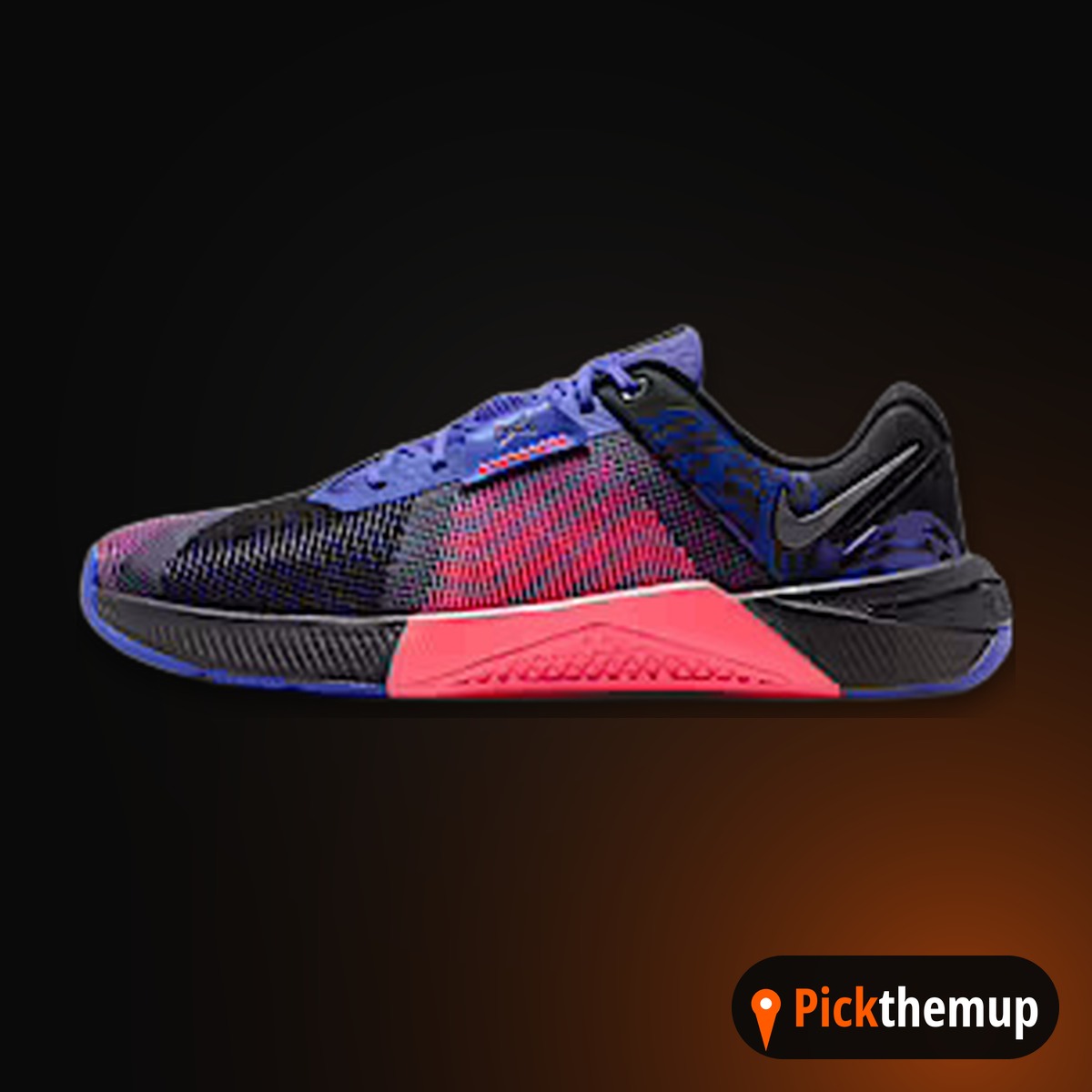
The flat, wide heel plate on a training shoe like the Metcon 10 AMP exists so a barbell has a stable, nearly incompressible surface to push against during squats and deadlifts. The forefoot usually gets a touch more give for rope climbs, box jumps, and lateral shuffles, which is why these shoes often feel split in two: hard in the back, a little softer up front. A wider platform and reinforced rope-guard panel round it out, both aimed at stability and durability rather than a smooth, cushioned ride.
When one pair can actually cover both
For a short warm-up jog before a lifting session, a stable training shoe is fine. For anything past a mile or two, or for a dedicated run, it stops being fine, and the same goes in reverse for grinding out box jumps or rope work in a running shoe. If your week includes both real lifting sessions and real mileage, two pairs will outlast and outperform one shoe asked to do a job it wasn't built for.
The fastest way to tell them apart in the store
Flex the shoe at the ball of the foot. A running shoe bends easily there because that's where your foot rolls through on toe-off. A training shoe barely flexes, because it's not supposed to. Check the heel too: a running shoe's heel is usually raised and rounded, a training shoe's is flatter and closer to the ground. Weight in hand is another tell, since training shoes tend to run noticeably heavier for their size.