Race Pacing: Why Even Splits Beat Going Out Hot
Every race has a moment around mile one where you feel invincible. The taper has you rested, the crowd is loud, and the pace that should feel like work feels like a jog. That feeling is a trap. Almost every runner who blows up at mile 20 or fades hard in the last kilometer of a 10K made the mistake in the first five minutes.
Why the early miles lie to you
Fresh legs and adrenaline hide how expensive a fast start really is. Run the first mile 15 seconds quicker than goal pace and you spend glycogen and muscle fatigue you cannot buy back later. In a 5K the penalty shows up fast, usually by the second mile. In a marathon it hides for 15 miles and then collects with interest. A steady effort almost always produces a faster finish time than a hot start followed by a shuffle.
Even splits versus negative splits
An even split means running every mile or kilometer at roughly the same pace. A negative split means the second half is a touch faster than the first. Elite marathon records are often run close to even, with a late surge. For most runners the realistic target is the first half a few seconds per mile slower than goal pace, settling into rhythm by the midpoint, then picking it up only if you feel strong. Do not force a big negative split. Aim for controlled and boring until the final stretch.
How to set your pace before the gun
Base goal pace on a recent race or a hard tempo workout, not on hope. Write the target for each mile on your wrist or in your watch, and decide in advance how you will handle hills, since the same effort runs slower uphill. Use lap pace rather than instant pace, because GPS wobbles under trees and between tall buildings. Lap pace and breathing together will keep you honest. If the first mile feels easy, that is the plan working, not a sign to speed up.
Gear that does not fight your plan
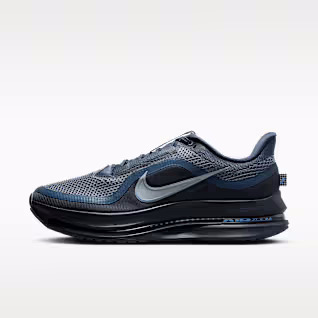
Pacing is easier in a shoe you trust. Wear the pair you have already logged long runs in, ideally with a few hundred miles of confidence behind it. A balanced, cushioned trainer such as the Pegasus is a common choice for people racing a half or full marathon at a steady effort, because it feels the same at mile 22 as it did at mile 2. New shoes on race day add a variable you do not need.
A simple pacing rehearsal
In your last long run before the race, run the middle third at goal pace and notice how it feels at the end. If goal pace feels smooth, you are set. If you are gritting your teeth already, the goal is probably a notch too ambitious. Adjust the plan now, while it costs nothing.