Standing All Day: What Your Feet Need From a Work Shoe
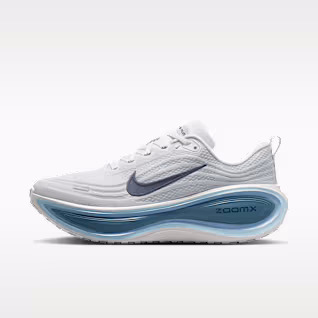
Retail, kitchens, warehouses, classrooms, hospital floors. If your job keeps you upright for ten hours, your feet are logging miles even if your watch says you barely moved. The surprise is that standing is harder on your body than walking, because nothing is changing. Walking rotates the load through your foot, ankle and calf with every step. Standing parks it in the same spots on hard flooring until they complain.
Why standing hurts differently than running
A run is a series of short, high impacts. A shift on concrete is one long, low load with no breaks. Blood pools in the lower legs, the arch sags a little more by the hour, and the heel and ball of the foot take constant pressure. That is why a shoe can feel great on a quick lap around the store and miserable at hour eight. Judge a work shoe by the end of the day, not the first ten minutes.
Cushion helps, but too much can backfire
Soft foam takes the edge off hard floors, and a thick, rockered midsole like the one on the Vomero Plus is popular with people who stand because it reduces how hard the forefoot works on every step. The catch is stability. Very squishy stacks can feel wobbly when you are pivoting at a counter or carrying a tray. Look for foam that is soft on top but supported at the edges, and press your thumb into the midsole. It should compress, then push back, not bottom out and stay flat.
The details that matter more than the brand
Start with a roomy toe box, since feet swell through the day and a pair that fits at 8 a.m. can pinch by 3 p.m. Try shoes on in the afternoon, with the socks you actually work in. Check the heel counter for a firm cup that keeps your heel centered. Then look at the outsole. A smooth fashion sole is a hazard on a wet kitchen floor, so a patterned rubber with real grip is worth more than any foam upgrade.
Small habits that stack up
- Rotate two pairs so the foam gets a full day to rebound between shifts.
- Swap in a supportive insole if your arch collapses by midday.
- Shift your weight, step side to side, and take a few calf stretches on breaks.
- Loosen the laces a notch after lunch if your feet swell.
When to retire them
Work shoes wear out faster than people expect, often in six to nine months of daily use. Watch for creases that stay in the midsole, a heel that tilts, or sore feet and shins that were fine a month ago. Pain that shows up earlier in your shift is the clearest signal the cushion is spent. Treat it like a running shoe and replace it before it turns into a nagging injury.